Page 8 of 14
Grammar: The Future in the Past
Gramatică: Viitorul în trecut. Înveți această regulă de gramatică pentru a exprima planuri, intenții sau așteptări stabilite în trecut, folosind structuri corecte.
Грамматика: будущее в прошедшем. Изучите это грамматическое правило, чтобы правильно говорить о прошлых планах, намерениях и ожиданиях.
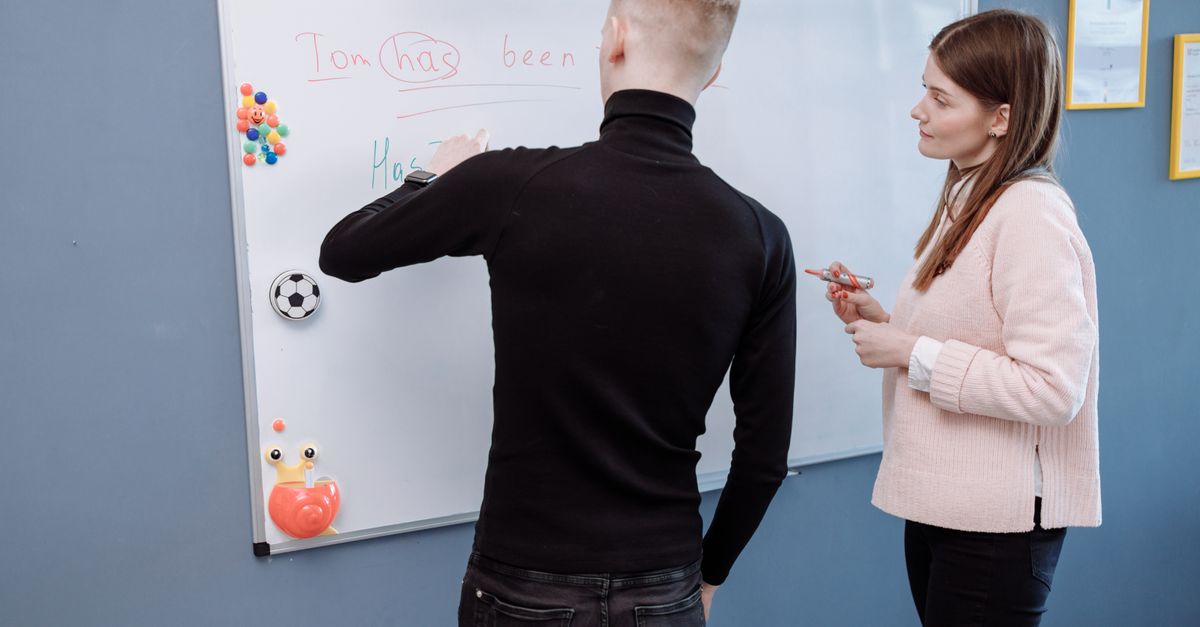
The Future in the Past
- We use the future in the past to talk about plans, intentions, or expectations that were decided from a past viewpoint. These events might or might not have actually happened.
- Structure
- Function
- Example
- was/were going to
- An intention or plan decided in the past (often unfulfilled)
- We were going to discuss my career trajectory, but we ran out of time.
- was/were about to
- An action that was going to happen very soon in the past
- I was about to ask for feedback when the Slack connection dropped.
- would
- A prediction or promise made from a past perspective
- My manager promised she would help me transition to a hands-on role.
- was/were supposed to
- An expectation, rule, or planned arrangement that often didn't happen
- Our skip-level meeting was supposed to take place in Chicago yesterday.
- was/were to
- A formal arrangement, destiny, or command in the past
- The team was to complete the system migration before the weekend.
- Remember
- Use 'was/were going to' to describe past intentions that did not necessarily happen.
- Use 'was/were about to' for immediate future actions in the past, often interrupted by another event.
- Use 'would' as the past equivalent of 'will' to express predictions, promises, or future habits from a past perspective.
- Use 'was/were supposed to' when an expected plan or duty was not realized as intended.
- Examples
- I was going to give you a heads-up about the database migration, but I got distracted.
- The engineer was about to open up about his frustrations when the video call suddenly disconnected.
- We knew the recurring meetings would become a force multiplier for our engineering team in Austin.
- Common mistakes
- I would to ask you about my career aspirations, but I was put on the spot.
- I was going to ask you about my career aspirations, but I was put on the spot.
- The team was about to launching the update when the London server crashed.
- The team was about to launch the update when the London server crashed.
Complete the sentences
- I (be about to) ____ explain my career aspirations when the internet connection in our Seattle office failed.
- We (be going to) ____ set a concrete agenda, but we spent the entire one-on-one discussing the urgent server outage.
- My manager said she (will) ____ help me transition to a hands-on role in the cloud team next quarter.
- The skip-level meeting (be supposed to) ____ happen on Tuesday, but the VP had to reschedule it due to a board meeting.
- We (be to) ____ review the system architecture together, but the emergency patch changed our priorities.
- I (be going to) ____ brush off the minor bug, but my senior colleague advised me to address it immediately.
Sources: photo by Thirdman on Pexels
Despre această lecție
Ședințele one-on-one sunt esențiale pentru dezvoltarea echipei și prevenirea demisiilor neașteptate în domeniul tech. În această lecție vei învăța cum să abordezi subiecte sensibile și cum să folosești structurile viitorului în trecut.
Об этом уроке
Встречи one-on-one важны для развития команды и предотвращения увольнений в IT. На этом уроке вы научитесь обсуждать сложные темы и использовать грамматику будущего в прошедшем.