Listening: Whiteboard Compromise
Audiție: Whiteboard Compromise. Asculți o discuție tehnică între doi arhitecți și rezolvi exerciții de ascultare pentru a înțelege provocările trecerii la microservicii.
Аудирование: Whiteboard Compromise. Вы слушаете обсуждение двух архитекторов и выполняете упражнения на аудирование, чтобы понять проблемы перехода на микросервисы.
Whiteboard Compromise
Two software architects at an office in Denver debate whether to break up their monolithic platform into microservices.
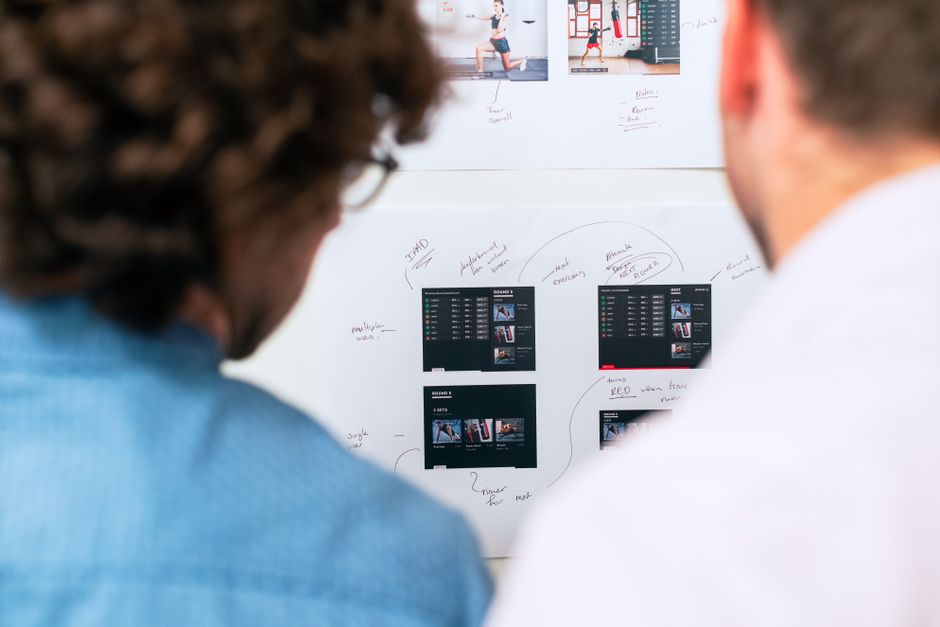
Whiteboard Compromise
Listen and choose the right answer
Why does Ben want to decompose the payment pipeline?
- Because they have outgrown their modular monolith and face scaling issues.
- Because the application is experiencing severe security breaches.
- Because the development team doesn't understand the monolithic code anymore.
What is Laura's primary concern about moving to microservices?
- That the cloud hosting fees will become too expensive for the Denver startup.
- That they will end up with a distributed big ball of mud and face network latency.
- That the development team will have to rewrite the database from scratch in Python.
What method does Ben suggest to keep the new services loosely coupled?
- Rewriting the entire application using a modern service mesh.
- Using domain-driven design and defining clear bounded contexts.
- Hiring external consultants to write strict API guidelines.
What surprising realization do Ben and Laura reach at the end of their whiteboard session?
- They realize that they need to scrap the microservices plan entirely.
- They discover they completely agree on the architectural splits but disagree on service names.
- They find out that the transaction engine was already split out last year.
Listen again and complete the sentences
- Ben: Look, Laura, we really need to talk about our core payment pipeline because we've completely outgrown our old ____ .
- Ben: Even though the monolith served us well during our Denver launch, it's now too ____ for our current engineering speed.
- Laura: Yes, but moving to a ____ means dealing with network latency, whereas right now everything runs in-memory and works.
- Ben: We won't, provided we carefully define each bounded context and establish a clear ____ for the ledger and checkout.
- Ben: Much as I worry about database migrations, we can use domain-driven design to ensure our services remain ____ .
Sources: photo by ThisIsEngineering on Pexels
Despre această lecție
Această lecție explorează marea dezbatere din ingineria software: alegerea între o arhitectură monolită și microservicii. Vei învăța cum să exprimi opinii puternice și să argumentezi decizii tehnice complexe în limba engleză.
Об этом уроке
Этот урок исследует главную дискуссию в разработке ПО: выбор между монолитной архитектурой и микросервисами. Вы научитесь уверенно выражать мнения и аргументировать сложные технические решения.