Listening: Mapping the Uncharted: A Conversation on Foresight
Audiție: Interviu radio despre viitorul afacerilor. Urmărește o emisiune radiofonică despre cercetarea viitorului și exersează-ți abilitățile de ascultare prin întrebări detaliate despre strategia corporativă.
Аудирование: Радиоинтервью о будущем бизнеса. Прослушайте радиопередачу об исследованиях будущего и отработайте навыки аудирования с помощью детальных вопросов о корпоративной стратегии.
Mapping the Uncharted: A Conversation on Foresight
A live BBC Radio 4 morning broadcast discussing long-term business strategy with an expert in futures research.
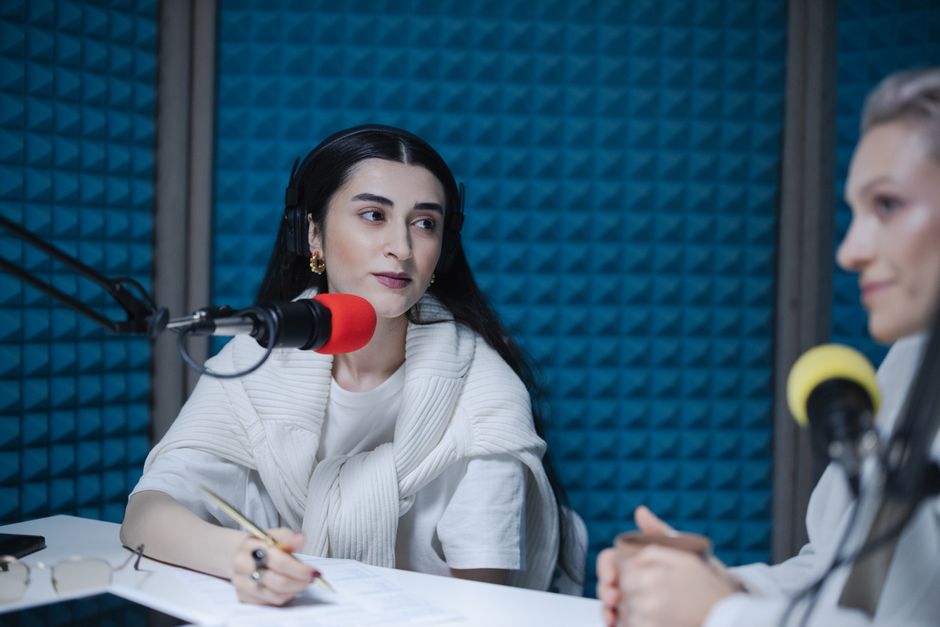
Mapping the Uncharted: A Conversation on Foresight
True or false?
Amanda claims that traditional five-year plans fail because they assume the future is just a louder version of today.
- True
- False
According to Amanda, most executives focus deeply on weak signals at the periphery of their industry.
- True
- False
The futures researcher argues that second-order effects are often ignored by firms looking only at immediate impacts.
- True
- False
The company that used scenario planning most successfully was a major global investment bank in New York.
- True
- False
The regional sandwich chain from Sheffield mapped out a wild-card scenario involving urban micro-mobility and automated delivery drones.
- True
- False
Listen again and complete the sentences
- Noah: Welcome back to 'Boardroom Horizons'. I'm Noah Finch. Today we're looking past the next quarterly earnings call and staring into the foggy abyss of the 2030s. Joining us in the London studio is Amanda Brooks, a leading futures researcher who helps multinational conglomerates with ____ and portfolio of bets. Amanda, good morning. Let's start with a provocative question: why are most traditional five-year strategic plans utterly useless?
- Amanda: Good morning, Noah. They're useless because they assume the future is just a slightly louder version of today. Executives sit in their comfortable corner offices in Canary Wharf, drafting linear projections that completely ignore every single weak signal at the periphery of their industry. When you rely solely on a ____ , you're bound to miss the profound discontinuities that actually reshape markets.
- Noah: Right, and that's where your work comes in. You help companies run a ____ to test their resilience. But most managers roll their eyes at what they call corporate crystal ball gazing. How do you get them to take it seriously?
- Amanda: We don't predict the future; we map multiple plausible futures, including what we call the wild-card scenario. We force leadership teams to stress-test assumptions about their core business model. If a sudden geopolitical shift or a radical technology occurs, what's your ____ ? Most firms only look at the immediate impact. They fail to see how the ripple effects destroy their adjacent markets.
- Noah: That sounds terrifyingly abstract for a CEO trying to hit double-digit growth next Tuesday. Give me a concrete example. Which global financial giant or tech titan used your ____ methodology best to dodge a bullet?
Sources: photo by cottonbro studio on Pexels
Despre această lecție
Dezvoltați-vă vocabularul strategic la nivelul C1-C2 prin discuții reale din boarduri corporative. Învățați structuri avansate pentru a planifica pariuri pe termen lung în mediul de afaceri din SUA și Marea Britanie.
Об этом уроке
Развивайте стратегический словарный запас уровня C1-C2 через реальные дискуссии в корпоративных советах директоров. Изучайте продвинутые структуры для планирования долгосрочных ставок в бизнесе США и Великобритании.